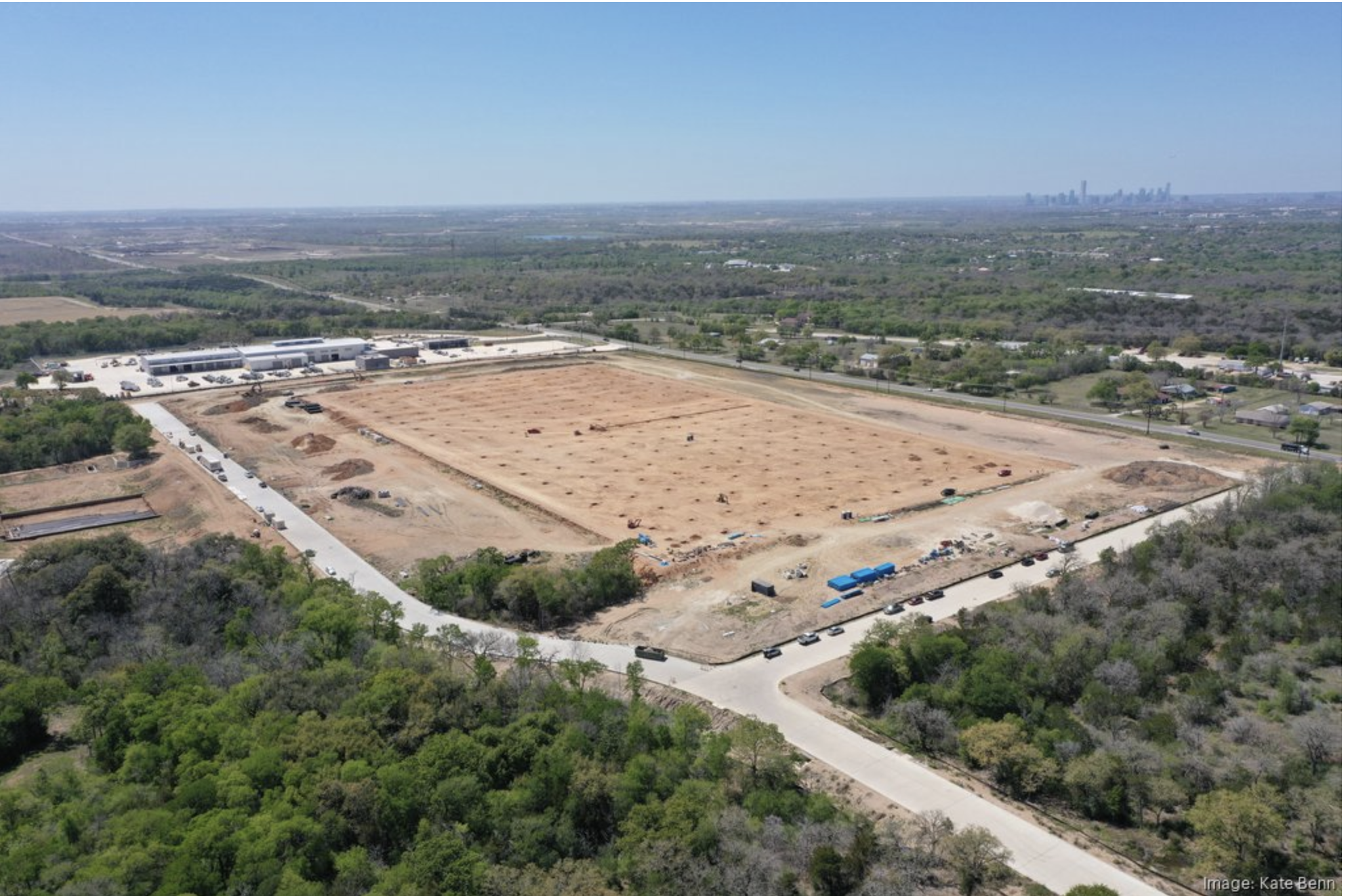
While Austin-area developers are feeling the heat from elevated industrial vacancy rates, they are still bullish on Central Texas’ growth. So much so that they are now building sprawling speculative buildings in the hopes of landing big fish tenants that need hundreds of thousands of square feet of space.
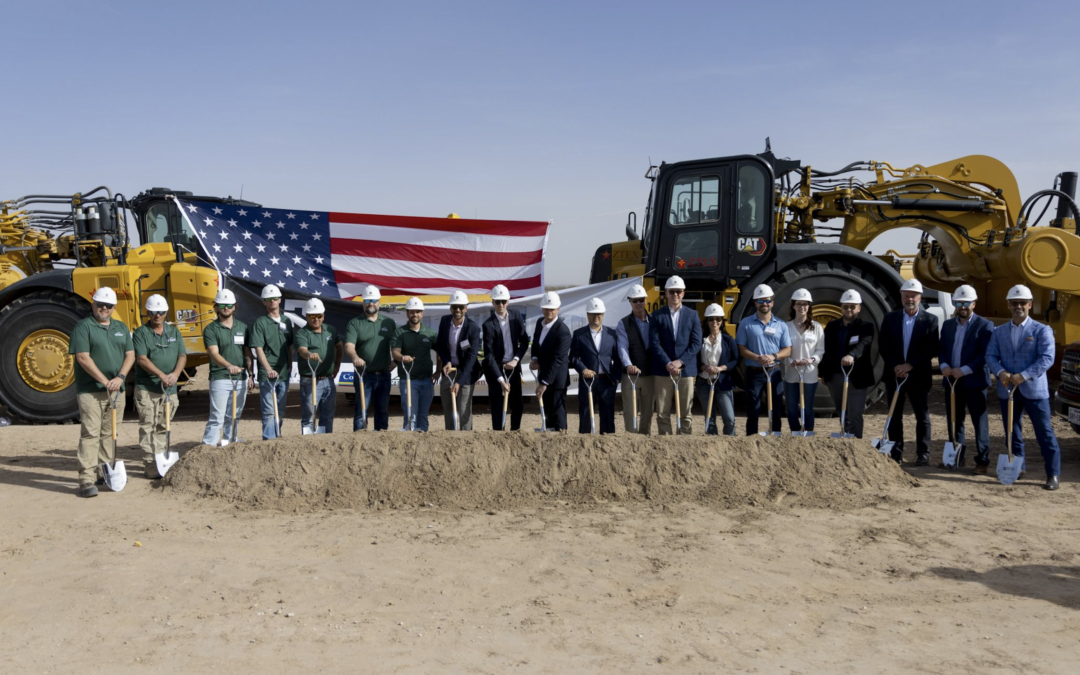
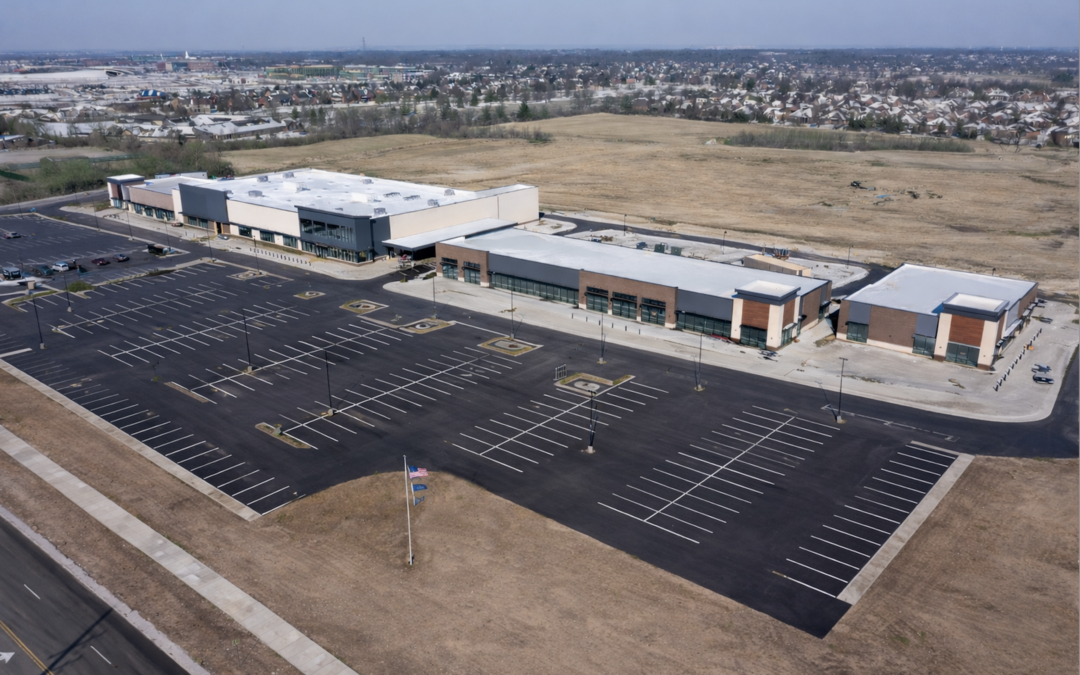
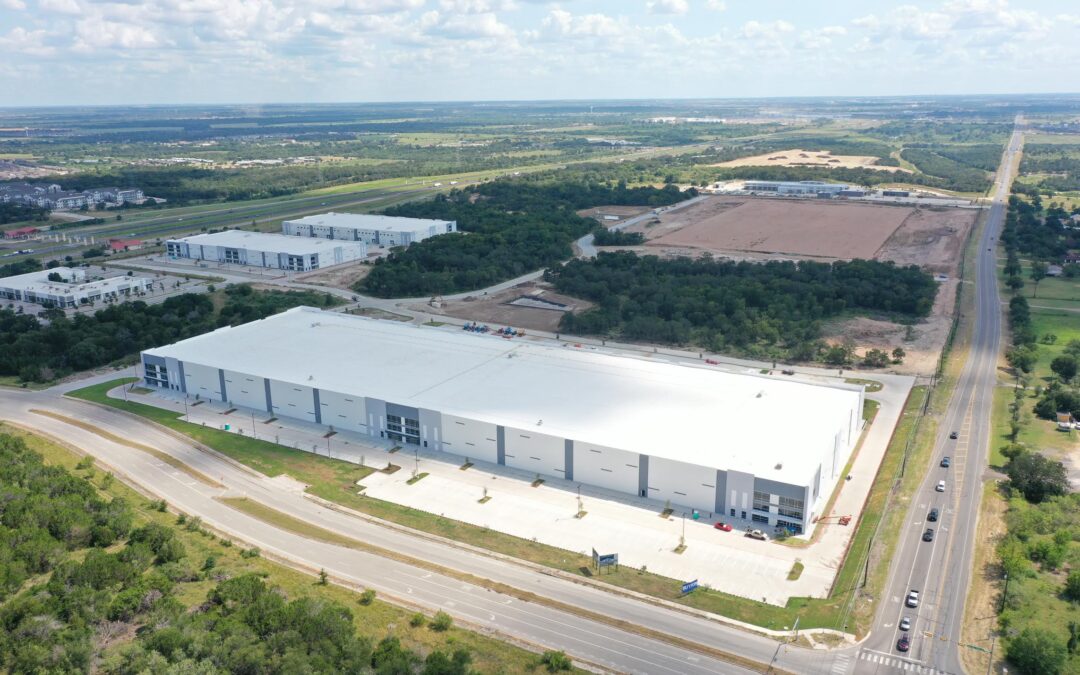
In mid-March, Missouri-based Sansone Group broke ground on a 682,000-square-foot speculative industrial building – believed to be the largest the Austin market has ever seen. The project further signifies that the race is on among industrial developers to build bigger. The Austin Business Journal identified at least a dozen recent speculative buildings over 400,000 square feet that have already been built, are under construction or are in the planning stages.
Sansone is joined by other developers like Dallas-based Jackson-Shaw Co. and Albuquerque-based Titan Development Ltd. in making big bets on massive speculative industrial buildings. A lack of large, available buildings in Austin is pushing users to markets like Dallas-Fort Worth or Houston, where inventory is plentiful. Developers are moving to resolve the supply issue to allow Austin to win big industrial investments.
“Currently, there are several large users in the market with very limited options,” Miles Terry, Jackson-Shaw’s vice president of development, said in an email. “We are providing the solution for that specific, underserved tier.”
The Sansone project, which is being co-developed with Iowa-based Principal Asset Management, will be the second phase of Austin Hills Commerce Center just off State Highway 130. Eventually, that project will total 1.4 million square feet.
Stream Realty Partners managing director and partner Sam Owen is helping lease Sansone’s Austin Hills Commerce Center building. He’s noticed that a lot of companies setting up shop in Austin are having to eat up multiple buildings to get to scale.
Base Power had to lease multiple buildings and pursue a build-to-suit. Compal Electronics Inc. is taking multiple buildings in Taylor and Georgetown. Tesla is taking an entire 1.4 million-square-foot industrial park spread across five buildings in Kyle. Baer Manufacturing Inc. opted for a build-to-suit in Georgetown. CesiumAstro Inc. is taking three buildings in Bee Cave.
Those deals inform the “thesis” for Sansone’s big building, Owen said. Austin’s rapid growth will push more companies into the region’s industrial market. Those users could be Tesla and Samsung Electronics Co. Ltd. vendors, manufacturers and distributors.
“We still feel like we’re in the early innings in the growth of the economy, and you need to provide the large-format buildings to meet the needs of the growth,” Owen said.
Look beneath the headline vacancy numbers’
The push to build bigger comes as the region is grappling with some of the highest industrial vacancies in the country — no matter whose data you look at.
CBRE Inc. pegs the vacancy at 20.4% – an all-time high for modern times. Jones Lang LaSalle Inc. tracks it at 18%. Cushman & Wakefield Inc. has it at 21.9%. Partners Real Estate had it at 14.8%. Aquila Commercial LLC counts it at 23.2%.
Despite that, developers and experts said they expect more buildings in the 400,000-plus-square-foot size range to hit the market. They have identified more and more demand from users requiring supersized swaths of space for manufacturing and warehousing.
Some larger buildings have remained empty since delivery. But the bulk of the others have been wholly leased by tenants that include Tesla Inc., ZT Systems Inc., Four Hands LLC and US Farathane Corp.
Jackson-Shaw noticed a gap in big-box inventory in the Austin area based on the number of large-scale users circling the market. Terry, the company’s vice president of development, said that recognition came after Jackson-Shaw saw strong activity at its 224-acre CrossPoint Business District in Georgetown.
After filling CrossPoint’s first phase, the developer inked a 606,000-square-foot build-to-suit tenant — Wisconsin-based Baer — for the second phase. That deal prompted Jackson-Shaw Co. to build an identical 606,000-square-foot speculative building, Terry said. It’s aimed to be open by the second quarter of next year.
“You have to look beneath the headline vacancy numbers,” Terry said in an email. “While there is higher vacancy across the broader Austin market, that is predominantly concentrated in shallow-bay warehouses under 200,000 square feet. The vacancy rate for large Class A industrial footprints is much lower.”
Besides sheer building size, Terry said that the biggest differentiator in today’s economic climate is speed to market. Austin’s competitiveness is harmed by not having available industrial buildings in larger size ranges. Terry thinks the speculative building will make Georgetown a regional and national contender for projects that in the past have bypassed the area.
“While many searches are multi-market and confidential, the lack of standing inventory undoubtedly puts the Austin MSA at a disadvantage,” Terry added. “We frequently see regional distribution centers and large-scale advanced manufacturers land in the DFW, Houston, or San Antonio corridors specifically because those markets offer ready-to-go inventory of this scale. We are working to ensure Georgetown no longer misses those opportunities due to a lack of space.”
Peter Crane, a regional director and development partner at Sansone, echoed those thoughts – adding that he doesn’t think “it’s going to be too long before there’s multiple 700,000-square-foot single-tenant requirements coming through.”
“In regard to Austin, there is an elevated vacancy rate,” he said. “But what we’re finding is there’s not many bomber buildings, buildings 500,000 square feet or larger. If you’re brave enough to build one of them, you’re likely one of a couple. And our understanding of the Austin market is that maybe that 100,000- to 150,000-square-foot building has been, and I hate the word, but you could almost say overbuilt.”
Sansone’s goal is to lease its speculative building at Austin Hills Commerce Center to a single-user.
“But we build these things with a plan A, B, C and D, and if it were to go multi-tenant, that’s not a problem,” Crane said. “We’ve done plenty of large spec buildings and filled them with more than one tenant.”
Titan Development Ltd. was one of the companies that found success erecting a large speculative industrial building. It built a 435,000-square-foot building at its NorthPark 35 industrial park in north Georgetown. That was purchased by New Jersey-based ZT Systems, which turned it into a 1,500-job factory.
Titan’s Austin-based partner Joe Iannacone said the firm is aiming to break ground by late spring or early summer on another 300,000-plus-square-foot speculative building at NorthPark.
Like the others, what Titan found is that there’s a lot of buildings out there in the 100,000-square-foot range. The outlier buildings of larger sizes, which he described as “few and far in between,” are showing “decent demands.”
“It’s tricky, right? You can’t go and throw a bunch of those out there,” Iannacone said. “There is a select amount of tenants that are looking for that. But if you keep the supply under control, that should continue to lease up.”
Bigger buildings are aimed at attracting, at maximum, two tenants. It actually becomes less cost-efficient to have more than that.
“If you’re breaking that into four tenants, to quad it there, those (dividing) walls are very expensive,” Iannacone said.
Demand is there – but wasn’t always
Cushman and Wakefield Managing Director Joe Brockman, who helps companies find industrial space, said he’s seeing more tenants that require north of half a million square feet.
He worked last year with three companies who were looking in that size range at multiple markets in Texas. They all preferred Austin, but ended up elsewhere because they had better options due to more inventory, which meant competitive rental rates.
“One of my groups probably would have chosen Austin last year if there was something on the ground north of half-a-million square feet that was available,” Brockman said.
He said he thinks developers are getting wind of that – essentially seeing “missed opportunities” with those projects that went elsewhere. He thinks more large-scale speculative buildings will essentially make Austin more competitive.
“Based on the amount of inventory we have, market-wide rates are becoming more and more competitive with those larger markets,” Brockman said.
Endeavor Real Estate Group principal Carter Thurmond agreed that “demand is there” for these larger tenants, with more projects requiring 280,000 square feet and more. But it’s not always been that way.
“The market would tell you five years ago there were not this many larger users,” he said.
Thurmond said it started about 18 months ago, and believes it was driven by heavier manufacturing users wanting to be in Austin. That’s due to companies wanting to be proximate to customers like Tesla and Samsung, and a desire from local outfits to expand. It’s also part of a push for near-shoring and on-shoring of domestic manufacturing. Austin’s reputation for workforce in the manufacturing space is becoming a national driver.
The problem, Thurmond said, is the companies that typically fit larger sizes are conducting multi-market searches. Landing those projects is still an exercise in math. It is dependent on things like incentives, land prices, construction costs and more – all factors that Austin can lose out on.
Still, he’s optimistic about larger buildings as opposed to some of the traditional-sized buildings.
“I think we’re certainly in a window of time if you were a big building, I would feel pretty comfortable versus a 100,000-square-foot rear-load building,” Thurmond said.