
Current Logistics Trends and Their Impact on Industrial Real Estate
In today’s logistics landscape, developing effective strategies for cross-docking, truck terminals, and industrial outside storage (IOS) is essential. A comprehensive strategy should focus on three key areas: ocean gateways for U.S. imports, volume flows from Mexico, and domestic distribution of consumer goods. Let’s delve into these pillars and explore how they shape the industrial real estate market.
Pillar 1: Ocean Gateways for U.S. Containerized Imports
Managing the containerized import volume flowing into the United States requires robust solutions at key ocean gateways. These major ports, such as Los Angeles/Long Beach (LA/LB), New York/New Jersey (NJ), Savannah, and Houston, are crucial entry points for goods from overseas. Analyzing historical data and forecasting trends help in preparing for future changes.
The COVID-19 pandemic caused significant disruptions, with ocean import volumes seeing dramatic increases in 2021 and 2022, followed by a sharp decline in 2023, returning to pre-pandemic levels. The forecast for 2024-2026 suggests a rebound, though recent crises in the Panama and Suez Canals could impact these predictions. The Suez Canal crisis has forced ships to reroute around the Cape of Good Hope, leading to capacity shortages and increased costs. Similarly, capacity restrictions in the Panama Canal are disrupting vessel traffic from the West to East Coast.
East Coast ports temporarily took the lead in 2023, but LA/LB is expected to regain prominence. Houston is emerging as a key player, driven by population growth and the need for sustainable transportation solutions to DFW. Smaller ports like Mobile, AL, and various East Coast ports may face challenges, while larger ports like Norfolk, VA, and Charleston, SC, are expected to continue growing.
Pillar 2: Volume Flows from Mexico
This pillar focuses on significant volume flows from Mexico, including goods produced through the Maquiladora program and high-value technology and automotive products from nearshoring initiatives. The Maquiladora program allows foreign companies to operate factories in Mexico to import materials duty-free and export finished goods, often back to the country of origin.
U.S.-based 3PLs (Third-Party Logistics Providers) are exploring Lazaro Cardenas as an alternative to LA/LB for supplying the Texas market, utilizing the CPKC (Canadian Pacific Kansas City) network for seamless cross-border transportation to Kendleton, TX. Ongoing East Coast ILA (International Longshoremen’s Association) negotiations have prompted shippers to consider ports of Tampico/Altamira in Mexico as viable alternatives for Gulf and East Coast volumes.
Setting up IOS operations in Lazaro Cardenas and Tampico/Altamira will help manage incoming ocean containers and follow their flow northward, with key hubs like Kendleton, TX and San Antonio, TX serving as strategic points for further distribution.
Pillar 3: Domestic Distribution of Consumer Goods
Investigating the domestic distribution of consumer goods in secondary and tertiary markets is crucial. Detailed exploration and strategic planning are essential to optimize local and regional logistics.
The initial strategy includes setting up truck terminals and IOS operations in critical U.S. ocean gateways such as NJ, LA/LB, and Savannah (Tier 1), along with Houston and Charleston (Tier 2). Additionally, it involves establishing truck terminals and parking for the Monterrey to Laredo, TX lane, and following distribution arteries to key destinations in Texas and the Midwest.
For the Ciudad Juarez to El Paso, TX route, the strategy involves managing the flow of raw materials and finished goods across the border and setting up operations along critical arteries for further distribution. In the second stage, a network of smaller truck terminals in secondary and tertiary markets, particularly in the Midwest, will support local trucking, middle-mile, and last-mile distribution.
Impact on the Industrial Real Estate Market
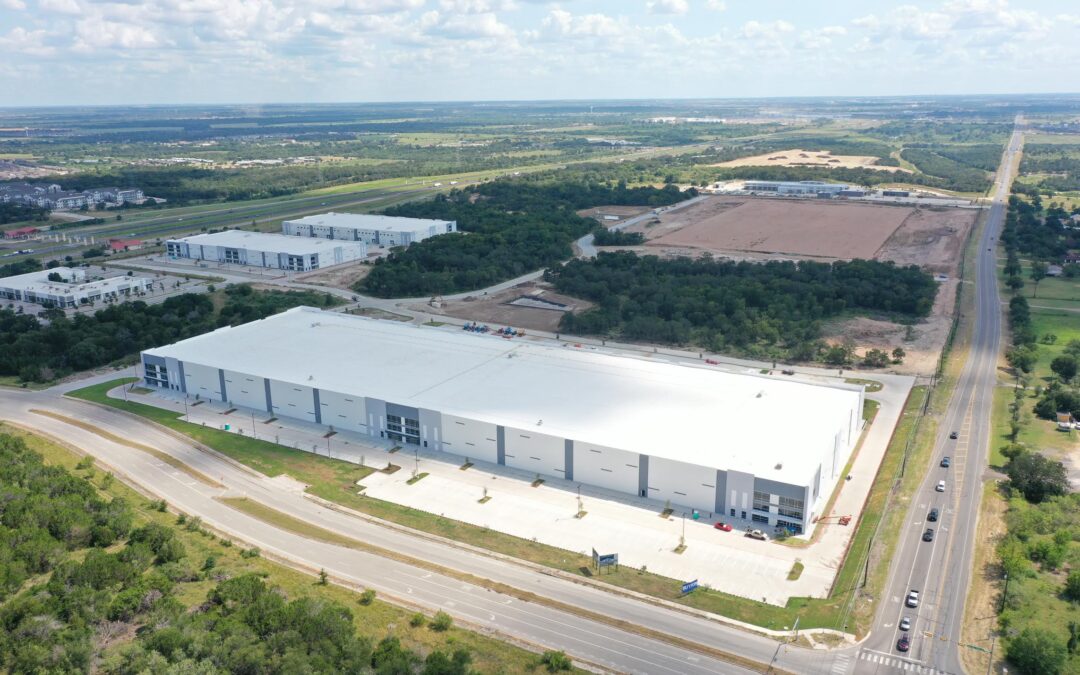
These logistics tactics will have a profound impact on the industrial real estate market. The need for modern, strategically located facilities will rise, driving demand for warehousing, distribution centers, and cross-docking terminals. Ports, border cities, and key inland hubs will see increased investment as logistics providers seek to optimize their supply chains.
A strategy for cross-docking, truck terminals, and IOS operations should cover key ocean gateways, northbound volume flows from Mexico, and domestic distribution networks. By capturing a significant share of volumes entering the U.S. by sea, truck, and rail, logistics companies can ensure a resilient and efficient supply chain in an increasingly complex global market. This, in turn, will shape the future of the industrial real estate market, driving growth and innovation.